The hidden world up close keeps fascinating me. What the naked eye misses, I capture with my camera.
The World Up Close: My Love for Macro Photography
My name is Mark Mooibroek, I’m 36 years old and live in beautiful Emmen (Drenthe), together with my wife Ilona and our two daughters: Sherren (14) and Daniek (10). In daily life, I work in secondary education as a system administrator and graphic designer. In my free time, I love grabbing my camera to capture special moments. Photography is the perfect way for me to be creative and completely unwind.
The world up close has fascinated me since the beginning of my photography journey. Every petal, dewdrop, and insect tells a story that is often missed with the naked eye. Through the lens of my Canon EOS R7 combined with the Canon RF 100mm ƒ2.8L Macro IS USM, that hidden world comes to life!
Why this combination?
The Canon R7 is a fast, lightweight, and versatile camera. The crop sensor (APS-C) gives me that extra bit of magnification for macro photography – ideal for small subjects. The RF 100mm is incredibly sharp, features Hybrid IS (Image Stabilization), and even offers 1.4x magnification. That magnification is unique in its class. Combined with the 1.4x crop factor of my sensor, this gives me a total of 2.8x magnification – perfect for macro photography.
Techniques I focus on in macro photography
1. Use manual focus
Autofocus can be helpful, but in macro photography the subjects are often so small that autofocus might miss the exact spot you want sharp. With manual focus, you choose exactly where to focus. With focus peaking, you can easily check if the focus is correct. Not sharp enough? Choose a higher f-number or slightly increase your distance to the subject.
2. Aperture: balancing sharpness and bokeh
For macro, I usually shoot with an aperture between ƒ/2.8 and ƒ/5.6. This gives enough depth of field to keep your subject in focus without making the background too busy. At ƒ/2.8, the bokeh is beautiful, but the sharp plane is so shallow that even a millimeter of movement can make a difference.
On the Canon R7, I often use focus peaking or magnify the live view 5x or 10x. This lets you see exactly where the focus point lies – very useful for insect eyes or fine flower details.
4. Light is everything
Natural light is wonderful, but macro sometimes needs a little extra. I often use a LED light or a flash with diffuser. This prevents harsh shadows and gives you more control over lighting. Sunrise and sunset, also known as the golden hour, provide warm and soft light that adds a magical touch to your photos. The long shadows and golden glow create depth and contrast – ideal for both landscapes and macros.
5. Staying still is a challenge
Every movement counts. That’s why I use:
Shutter delay or a remote control. Most cameras can be operated with an app nowadays, but I prefer a physical remote – it just works faster.
IBIS + lens stabilization turned on together. If your camera and/or lens has stabilization, enable it – unless you're using a tripod. Then it’s best to turn it off to avoid micro-movements caused by the stabilizer itself.
A rice bag as a quick and flexible support on location.
Go out early: Insects move slower at sunrise, the light is softer, and plants are often covered with dewdrops.
Look for contrast: Think of a light insect against a dark background – it creates stronger images and pulls attention to your subject.
Use magnification wisely: The 1.4x magnification of the RF 100mm is amazing, but also magnifies mistakes. Focus stacking helps if you want more depth. It only works on still subjects like flowers. You focus from front to back, and the camera takes multiple shots at different focus distances. You can merge these layers in Photoshop for full object sharpness – the result is stunning! See the example below. Here I used focus bracketing with 30 shots.
Practice composition: Not everything has to be centered. Place your subject off-center, try a lower or different angle – it can result in much more interesting images.
Pay attention to the background: Sometimes, the strength of a photo lies in what’s not in the foreground. A clean background helps your subject stand out. Tilt your camera for a different look.
Take multiple shots: Try different compositions, angles, and distances. You’ll thank yourself later when selecting the best one.
To conclude
Macro photography is all about patience, precision, and a love for detail. Sometimes you come home with just one good shot – but that one can be magical. The Canon R7 and RF 100mm ƒ2.8L help me capture that magic. I hope these tips inspire you to discover your own world up close.
Got questions or want to share your results? Feel free to reach out!
Comments
4 comments
Share what stood out to you, what you learned, or what you would try yourself.
Martin
Mooi stukje mark.
Mark Mooibroek
Dankjewel Martin! 😀
Lisa
Wat een prachtig en inspirerend verhaal Mark! 🤩 Je passie voor macrofotografie spat echt van het scherm af. Ik vond vooral je uitleg over handmatig scherpstellen heel leerzaam.
Mark Mooibroek
Bedankt voor je compliment Lisa! Wat fijn om te lezen dat je er iets aan hebt gehad.
Get inspired by my latest blog posts about photography, macro, nature, techniques and more. Discover the stories behind the images, practical tips to improve your own photos, and personal experiences from the field.
11May
Blog
Working Smart in Lightroom Classic
17 min reading time
A great photo doesn’t just start behind the camera—it also starts with a smart workflow. In this article, I’ll show you step by step how I import, organize, edit, and export my photos in Lightroom Classic. With practical tips, useful settings, and an efficient workflow, you’ll save time and get even more out of every photoshoot.
05,0
17Jan
Blog
Portrait / Studio Photography
8 min reading time
How do you create a professional portrait with just one light source? I’ll show you step by step how I approach this studio shoot
25,0
24Oct
Blog
Color and Light: Playing with Atmosphere
6 min reading time
Let light and color tell your story. Discover how to create atmosphere in every photo — from forest light to soft autumn tones.
04,8
05Oct
Blog
Mastering Sharpness and Focus
4 min reading time
Sharpness starts with control. Discover how to truly master focus and capture images that are razor-sharp down to the finest detail.
05,0
01Sep
Blog
The Power of Manual Mode
5 min reading time
Manual Mode may seem intimidating, but it actually gives you control. In this blog, learn how and get tips to instantly improve your photography.


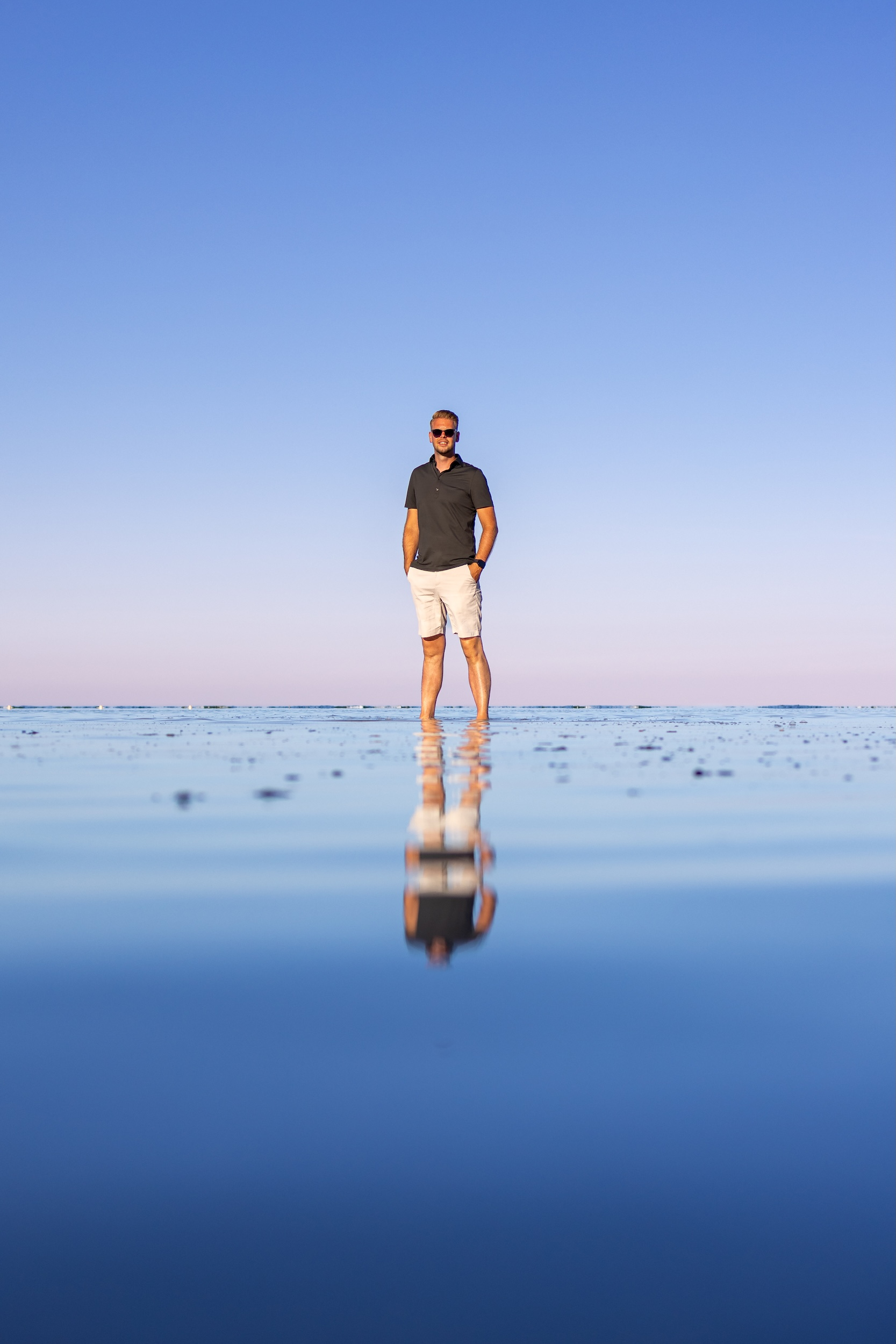

 Author: Mark Mooibroek





Comments
4 comments
Share what stood out to you, what you learned, or what you would try yourself.
Mooi stukje mark.
Wat een prachtig en inspirerend verhaal Mark! 🤩 Je passie voor macrofotografie spat echt van het scherm af. Ik vond vooral je uitleg over handmatig scherpstellen heel leerzaam.