How do you create a professional portrait with just one light source? I’ll show you step by step how I approach this studio shoot
Portrait / Studio Photography – How I Build My Shoot (and How You Can Too)
“How do you create such calm, professional portraits with a beautiful background?”
For many people, studio photography immediately sounds like something complicated: lots of gear, endless settings, and above all… a lot of hassle. But honestly? It really doesn’t have to be that big. This shoot was so enjoyable precisely because it started very “small”: a black background, one flash with a softbox, and a reflector – simply set up in the living room.
This was a personal shoot, which makes it extra special. You don’t just want a beautiful portrait, but also a relaxed setting where everything feels right. In this blog, I take you along as if you’re standing next to me in the "studio": what I set up, why I do it this way, and what I check before pressing the shutter.
The foundation of my setup (simple, but incredibly effective)
This is the gear I used for this shoot:
Canon EOS R5 + RF 70-200mm f/2.8L
Godox Speedlite TT685 II + Godox X Pro-C II transmitter
Godox 60x60 softbox
Godox 5-in-1 reflector (110cm)
Westcott 570X X-Drop backdrop stand (5’ x 12’)
Peak Design Travel Tripod
MacBook Pro 16" (tethered) + USB-C 4.0 cable (3m)
Lightroom Classic (for tethered shooting and reviewing)
What I really like about this setup is that it’s not a massive studio with three lights and complicated diagrams. It’s one light source, placed well. And that’s exactly where you can learn so much.
Step 1: The background – how to make it truly black (even if the room isn’t)
A black background sounds simple: hang up a backdrop and you’re done. But getting it truly black is mainly about how you work with distance and light.
My most important rules:
Place your subject away from the background (ideally 1.5 to 2.5 meters).
Make sure your flash light hits the subject, not the background.
Use a low ISO so ambient light has less influence.
Why is that distance so important? Because light drops off quickly the farther it travels. When your subject is lit correctly, the background naturally falls into darkness. And that immediately looks far more professional.
💡 Tip: Still seeing grey in your background? Move your subject slightly forward or rotate the softbox away from the background. A small adjustment can make a huge difference.
Step 2: One flash, one softbox – but where do you place it?
This is where studio photography really starts to “click.” The mood of your portrait comes for about 80% from light placement – not from expensive gear.
My go-to base setup:
Softbox at about a 45-degree angle to the subject
Slightly above eye level, angled downward
Softbox placed relatively close (around 60–100 cm from the face)
Why so close? Because closer light is softer, giving you a beautiful transition from highlights to shadows. That is what creates that calm, cinematic look.
💡 Tip: Watch the catchlight (the reflection in the eyes). It’s often the quickest check. If it looks natural and well positioned, your softbox is usually in the right spot.
Step 3: The reflector – your secret weapon (especially for portraits)
I’m a big fan of reflectors. Not because you have to use one, but because they work so quickly and intuitively. They soften shadows, add sparkle to the eyes, and make faces look friendlier – without needing a second light source.
How I use it most often:
White side: soft, natural, and safe (my favorite)
Silver side: more punch and contrast (can get harsh quickly)
Gold side: warm tones (beautiful, but use subtly)
I usually place the reflector on the shadow side, just outside the frame. Sometimes I even let the model hold it – especially with kids. It feels less “studio-like” and keeps things relaxed.
💡 Tip: If the reflector is too close, the image can become flat. Keep it a bit farther away so it gently supports the light instead of overpowering it.
Step 4: My camera settings (and why I almost always end up here)
With flash photography, control is everything. That’s why I almost always shoot in manual mode.
A reliable starting point:
ISO: 100–400
Shutter speed: 1/160s to 1/200s (safely below flash sync)
Aperture: f/2.8 to f/4 for portraits, or f/5.6 for extra sharpness
From there, I adjust the flash power until the exposure feels right. I usually start around 1/32 or 1/16 power and fine-tune based on distance and mood.
💡 Tip: Want a darker, more moody look? Don’t immediately lower flash power. First try moving the softbox slightly farther away or rotating it a bit. Light shape creates atmosphere.
Step 5: The difference between “nice” light and “wow” light (tiny adjustments!)
This is where it gets fun. Once the basics are in place, I start experimenting. And it doesn’t have to be dramatic – sometimes it’s literally a 10 cm move.
Move the light slightly more to the side so a small triangle of light appears under the eye on the shadow side. Instant depth and character.
2) Split lighting (bold and dramatic)
Place the light almost directly from the side. One half of the face is lit, the other in shadow. Perfect for a strong, powerful look.
3) Back / side light (rim light)
Move the light slightly behind the subject so it grazes the hair. This creates a beautiful glow and separation from the background.
💡 Tip: With rim light, watch out for blown highlights on the nose or cheeks. If that happens, rotate the softbox slightly back toward the camera.
Posing (without it feeling forced)
This is incredibly important, especially for a personal shoot. I don’t want to give a “posing lesson.” I want real expressions, real connection, something that feels right.
Things that work well for us (and almost always look relaxed):
Give the subject something to do: hands in sleeves, hair behind the ear, chin slightly forward
Use small prompts: “look past me,” “think of something funny”
Keep talking: silence often makes people insecure (especially kids)
Allow movement: small steps, shoulder turns, subtle head movement
💡 Tip: The best smile often comes right after the photo. Keep shooting short bursts of 2–3 frames. That perfect expression often appears unexpectedly.
Lens choice in practice: why a 70–200mm works so well
I love using a 70–200mm in the studio because it lets you easily change the mood:
Another advantage: you’re standing a bit farther away from your subject. That gives space and calm, which feels much more comfortable for people who aren’t used to being photographed.
💡 Tip: Avoid going too wide for portraits. Wide angles can cause distortion (larger nose, rounder face). For flattering portraits, 85mm and up is usually a sweet spot.
Tethered shooting: why I love it (and why you should try it at least once)
This shoot was done tethered: camera connected directly to my MacBook. And honestly, once you’re used to it, it’s hard to go back.
The biggest advantages:
You immediately see if focus is truly spot-on
You notice wrinkles, stray hairs, and small details right away
Your subject can occasionally look along – which builds confidence (“Oh wow, that looks great!”)
You work more calmly, with less doubt
💡 Tip: Place your laptop where you can glance at it quickly without interrupting the flow. I usually check for five seconds after every 3–5 shots and then keep going.
Fun ideas to try once your setup is ready
Once everything is set, this is the most fun part: small experiments that instantly change the vibe of your image.
Shiny skin → move light more to the side and soften slightly
Not sharp → use Eye AF, avoid slow shutter speeds, and check on a large screen
Final thoughts: the studio isn’t about perfection – it’s about playing with light
What I love most about studio and portrait photography is the process. You build something. You place the light, see the effect, adjust, and suddenly there’s that moment where everything just works. Not because it’s technically perfect, but because the feeling is right.
And with a personal shoot, that feeling matters even more. Not just creating beautiful images, but also a good memory. Laughing together, being a bit silly, checking the screen in between, and then continuing.
If there’s one thing I hope you take away from this blog, let it be this: start simple. One light, one reflector, a calm background. Then start playing. You’ll learn so much faster what light does – and you’ll naturally develop your own style.
Do you have questions about flash settings, light placement, or how to make this work at home in a small space? Let me know – I’m happy to think along with you!
Comments
2 comments
Share what stood out to you, what you learned, or what you would try yourself.
Shannon Hendriks
Waardevolle informatie, erg motiverend om zelf er ook mee te beginnen. Heel overzichtelijk!
Get inspired by my latest blog posts about photography, macro, nature, techniques and more. Discover the stories behind the images, practical tips to improve your own photos, and personal experiences from the field.
11May
Blog
Working Smart in Lightroom Classic
17 min reading time
A great photo doesn’t just start behind the camera—it also starts with a smart workflow. In this article, I’ll show you step by step how I import, organize, edit, and export my photos in Lightroom Classic. With practical tips, useful settings, and an efficient workflow, you’ll save time and get even more out of every photoshoot.
05,0
17Jan
Blog
Portrait / Studio Photography
8 min reading time
How do you create a professional portrait with just one light source? I’ll show you step by step how I approach this studio shoot
25,0
24Oct
Blog
Color and Light: Playing with Atmosphere
6 min reading time
Let light and color tell your story. Discover how to create atmosphere in every photo — from forest light to soft autumn tones.
04,8
05Oct
Blog
Mastering Sharpness and Focus
4 min reading time
Sharpness starts with control. Discover how to truly master focus and capture images that are razor-sharp down to the finest detail.
05,0
01Sep
Blog
The Power of Manual Mode
5 min reading time
Manual Mode may seem intimidating, but it actually gives you control. In this blog, learn how and get tips to instantly improve your photography.


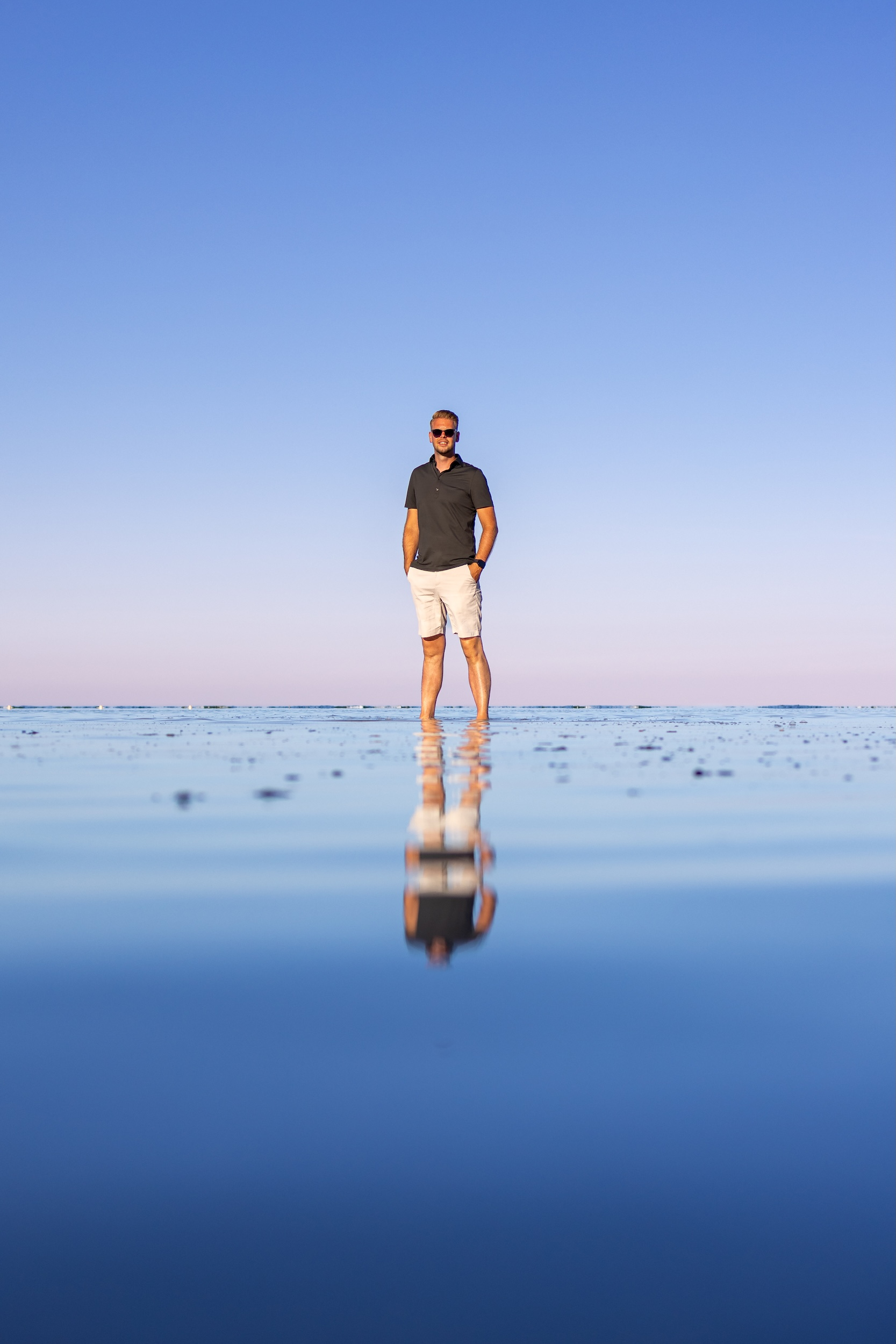

 Author: Mark Mooibroek





Comments
2 comments
Share what stood out to you, what you learned, or what you would try yourself.
Waardevolle informatie, erg motiverend om zelf er ook mee te beginnen. Heel overzichtelijk!